
Ferrari Luce and Nausicaä: the same hand, two revolutions two days apart
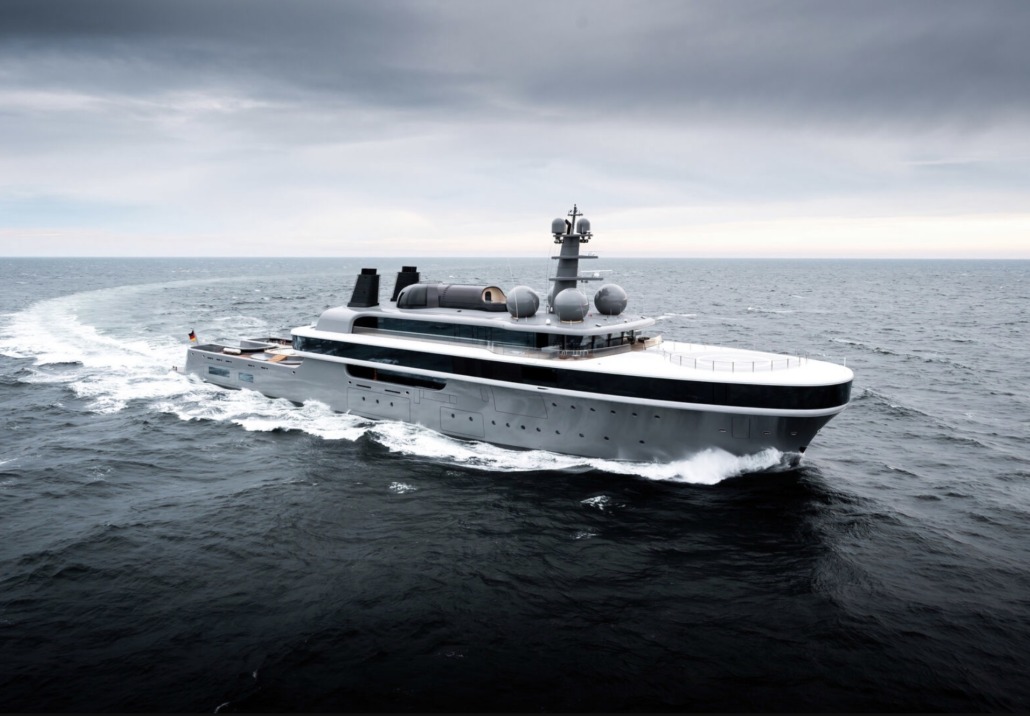
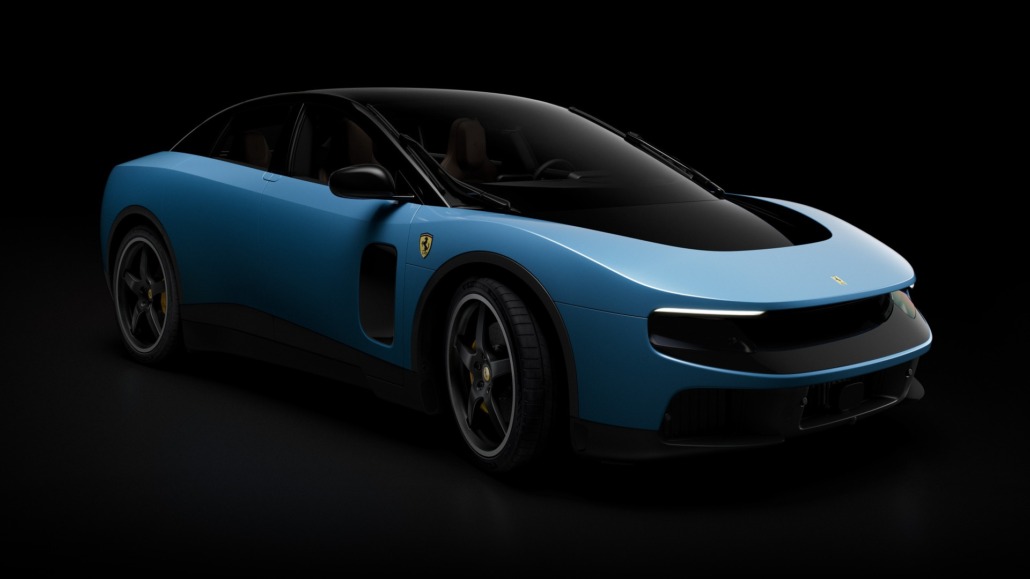
Within seventy-two hours in late May 2026, two objects destined to spark debate made their debut. On 23 May, Lürssen delivered Nausicaä, a 114.2-metre superyacht built under the code name Project Cosmos. On 25 May, in Rome, Ferrari unveiled Luce, its first all-electric car. They seem to belong to two distant worlds, yet they share far more than a coincidence of timing: the same creative signature, the same philosophy of subtraction, the same fate of a divided reception — and even a clientele that looks toward Japan (Nausicaä’s owner is the entrepreneur Yusaku Maezawa). What unites them above all is one name: Marc Newson, who designed Nausicaä in its entirety and who, together with Jony Ive, is a partner at LoveFrom, the studio that collaborated with the Ferrari Styling Centre on Luce.
The Ferrari that divides
Luce breaks with everything we associate with Maranello. It is the first five-seat, four-door Ferrari, built on a dedicated electric platform: four motors (one per wheel) for more than 1,050 hp, an 800-volt architecture, over 530 km of range and a top speed above 310 km/h, despite weighing more than 2.2 tonnes. No V12 roar: a sensor captures the powertrain’s actual vibrations and amplifies them into an original acoustic signature. Clean lines, soft volumes, generous glazing. The reaction was ferocious — some compared it to the Fiat Multipla, others dismissed it as “an iPad on wheels.” Ferrari’s stock opened lower on the day of the unveiling.
The superyacht that does the same
Nausicaä applies the same grammar to the sea. Newson designed it entirely, inside and out — rare at this scale — staying faithful to the digital concept from six years earlier. The result is a profile made of curves, rounded edges and louvred details, free of flat surfaces and hard lines: a continuous band of glass wraps the entire upper deck. Beneath the skin, serious engineering: diesel-electric propulsion with Azimuth pods and a battery bank of up to 2 MW for lying at anchor silently and without local emissions, an Ice Class hull and provision for future methanol fuel cells. The open aft deck spans the full 18 metres of beam around a pool and Jacuzzi.
The detail: the LoveFrom lantern
The same world also produces small objects. The Sailing Lantern, born from LoveFrom (Ive and Newson) with Japan’s Balmuda, is an LED lantern for the sea: marine stainless steel, precision-ground glass, a petal-shaped dial. The light shifts from warm red to white like a flame and fades out with a residual glow, like a candle. Ive spent two years designing it simply because, as a sailor, he couldn’t find anything like it on the market. Produced in a limited edition of 1,000 pieces at $4,800 (€4,500), it is the same obsession with the essential, in pocket scale.

Does history reward the bold?
True, everyone is criticising the new Ferrari. But it’s worth remembering that truly disruptive products have almost always divided opinion at first. Consider the Wally Tender (2001): when it appeared, with its straight vertical bow in place of the classic raked prow, and that wraparound integrated fender never seen before, it was treated as an oddity. And yet Wally had just set a new benchmark in nautical design. Formal purity unsettles before it convinces. If in twenty years Luce and Nausicaä are remembered as turning points, we’ll know that the scepticism of 2026 was, quite simply, the price of courage.
 EN
EN  IT
IT